
5 Innovative Recycling Ideas To Create Unique Water Fountains
Old objects carry stories, textures, and character that new materials often lack. When those objects meet moving water, the result feels personal, unexpected, and alive. Recycling water fountain ideas draw inspiration from flea markets, garden sheds, salvage yards, and forgotten corners of a property, transforming overlooked items into water features that feel intentional rather than improvised.
Across gardens, courtyards, and public spaces, recycled fountains have gained attention for their ability to invite creativity without sacrificing impact. Water flowing through a repurposed form creates sound, motion, and reflection that immediately draws people in.
Below are five recycling-driven fountain concepts that continue to inspire designers and property owners, along with practical insight on what makes them successful.
Recycling Water Fountain Ideas That Push Creative Boundaries
Recycled fountains work best when form and function support one another. Visual charm captures attention, while proper circulation and water control keep the feature enjoyable long after installation.
Stacked Containers With Cascading Water Flow
Galvanized buckets, metal tubs, barrels, and oversized planters remain favorites for recycled fountain designs. When stacked or offset vertically, these containers guide water from one level to the next, creating a gentle sound and constant motion.
Why this idea works
- Containers naturally define water paths and spill points
- Height variation adds visual interest without complex structures
- Materials age gracefully, developing patina over time
From a design standpoint, consistent flow rates and concealed plumbing elevate this concept. Without careful pump selection and internal fittings, water can splash unpredictably or stagnate. Proper planning turns a casual stack of containers into a composed fountain that feels balanced and deliberate.
Vintage Kitchenware Turned Whimsical Features
Old teapots, kettles, watering cans, and colorful bottles introduce personality and charm. These pieces often suit residential gardens, café patios, and playful commercial spaces where lighthearted design feels appropriate.
Hidden pumps quietly circulate water while the vessels appear to pour endlessly. Placement matters here, as visual alignment helps maintain the illusion. Surrounding the feature with river stones or planting beds grounds the design and helps it feel permanent.
Design tip: Smaller recycled fountains benefit from steady, low-volume circulation rather than dramatic flow, which helps protect delicate materials.
Architectural Salvage as Vertical Water Walls
Reclaimed doors, window frames, glass panels, and stone slabs are well-suited to water wall designs. Leaned, mounted, or framed, these elements bring texture and history into modern spaces.
Vertical fountains benefit from controlled distribution systems that spread water evenly across the surface. Without that balance, dry patches or heavy streaks can distract from the design. When done well, water highlights cracks, grain, and weathered finishes, turning imperfections into focal points.
This approach works exceptionally well in courtyards and entry spaces, where a vertical feature saves footprint while delivering a strong visual presence.
Unconventional Objects as Sculptural Statements
Some recycled fountains lean fully into artistic expression. Old pianos, brass instruments, antique trunks, and industrial machinery parts have all been reimagined as water features that double as sculpture.
These designs thrive on contrast. Water softens rigid forms, while sound brings warmth to cold materials. Structural support becomes a key consideration, particularly for heavier or irregular objects. Reinforcement and splash control help maintain safety and visual order without limiting creativity.
Projects like these often find homes in public spaces, cultural centers, and hospitality environments that value originality and storytelling.
Natural and Reclaimed Stone Compositions
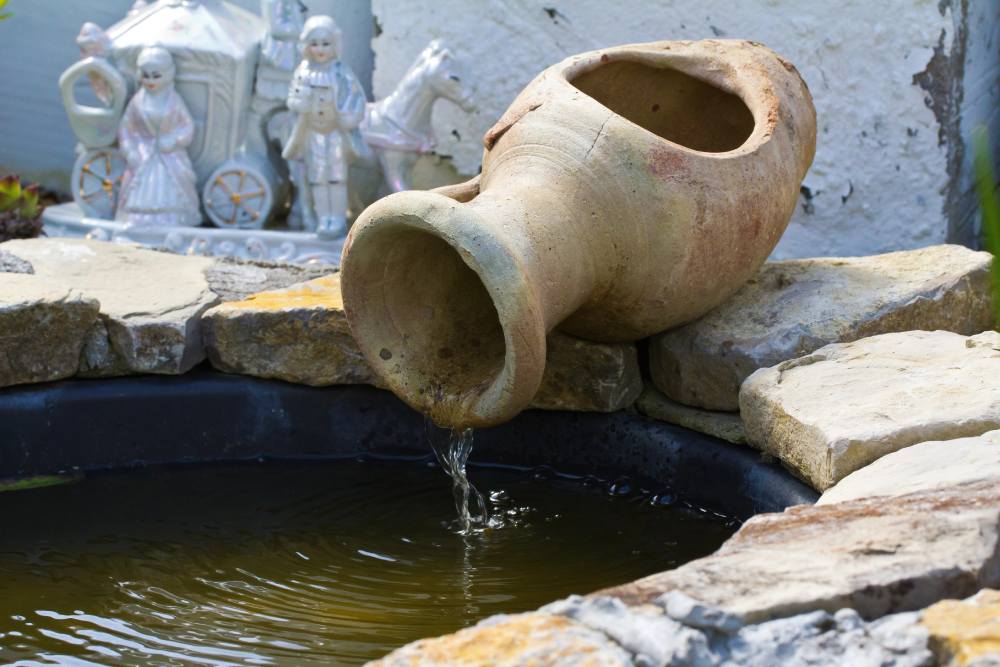
Stone remnants, concrete bowls, amphora-style vessels, and salvaged hardscape pieces create fountains that feel rooted in place. Bubbling fountains and disappearing basins remain popular because they deliver calming sound without visible reservoirs.
Common recycled stone elements
- Concrete bowls with central bubbling jets
- Stone planters adapted into overflow basins
- Mixed-height rocks guiding water downward
Plants surrounding these fountains soften edges and enhance the relationship between water and landscape. Subtle designs still rely on precise basin sizing and filtration to keep water clear and movement consistent.
Practical Considerations That Shape Successful Recycled Fountains
Creative reuse opens endless possibilities, yet water features demand more than visual appeal. Pumps, filtration, lighting, and maintenance access shape how enjoyable the fountain remains over time. Seasonal cleaning, algae control, and debris management should influence design choices from the start.
Many recycled concepts evolve into long-term installations once supported by properly engineered systems. This is where professional experience makes a meaningful difference, particularly for larger or publicly accessible features.
From Inspiration to Execution
Recycled fountain ideas often begin casually, sparked by an object that feels too interesting to discard. Bringing that idea to life requires translating inspiration into a reliable system. At Roman Fountains, our role is to turn creative concepts into fully engineered fountain systems through design development, detailed documentation, and domestic manufacturing.
While inspiration may come from reclaimed materials, execution depends on precision. Our experience spans decades of custom water features across a wide range of applications, including projects that began with unconventional ideas. Examples of how imaginative concepts become finished installations can be found in our projects.
Creativity Deserves the Right Foundation
Recycled fountains prove that beauty often hides in overlooked places. When water flows through reclaimed forms, it invites pause, curiosity, and connection. The most memorable designs respect the character of the materials while supporting them with thoughtful engineering and durable construction.
If a recycled fountain concept is taking shape and deserves professional guidance, our team welcomes the opportunity to help refine it into a lasting feature. Reach out to discuss ideas, ask questions, or explore how recycled inspiration can become a custom fountain built to perform for years to come.