
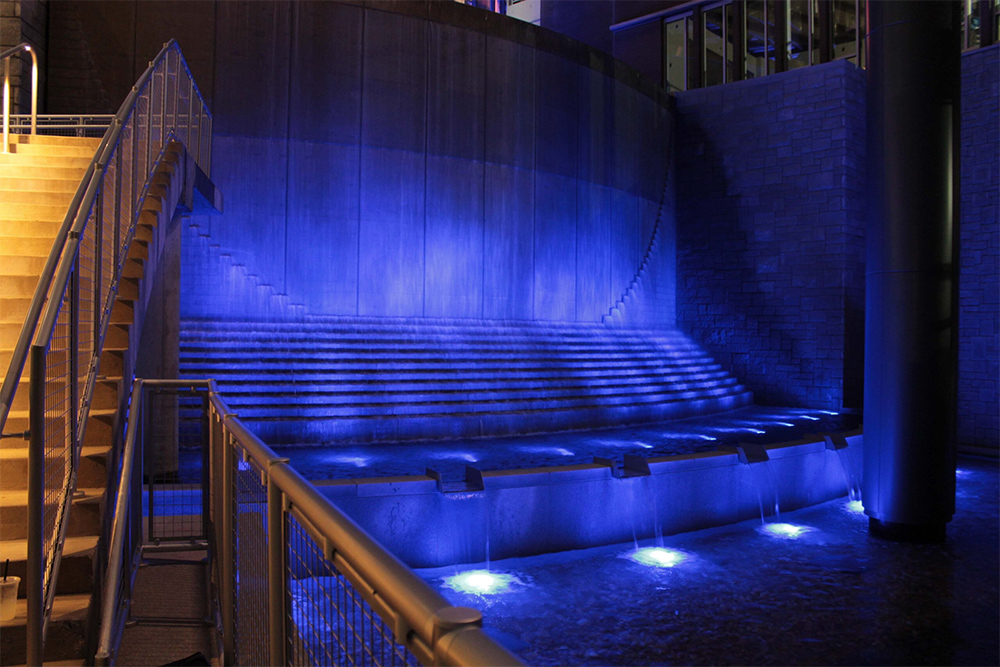
Do Fountains Increase Perceived Value Enough to Justify the Cost?
Short answer: yes, but only when the fountain is doing a job, not just sitting there.
A water feature added as decoration, an afterthought dropped into a leftover corner of a site plan, rarely survives a value-engineering pass. A water feature designed as a functional part of the experience, the thing that anchors circulation, signals arrival, or gives a courtyard a reason to exist, tends to survive budget cuts that eliminate everything else. The difference isn’t the fountain. It’s whether the fountain is load-bearing in the design, or decorative.
If you’re the one who has to defend the line item to a client, a developer, or a municipal budget committee, here’s how to think about that distinction and make the case with something more substantial than “it’ll look nice.”
Why “Does It Increase Value” Is the Wrong First Question
Search this topic and you’ll find dozens of articles claiming a fountain adds a specific percentage to home value, backed by studies that don’t hold up to scrutiny. That framing doesn’t transfer to the kind of work you do anyway. A single-family front yard and a mixed-use plaza create value through completely different mechanisms, and conflating them is how a good design idea turns into an easy line to cut.
For a commercial, civic, or institutional project, perceived value from a water feature shows up in three separate places, and it’s worth separating them when you’re building your case:
Image and positioning value. A fountain functions as a landmark. It’s the thing a leasing brochure photographs, the backdrop for a groundbreaking, the detail that makes a master plan read as considered rather than generic. This value is real, but it’s the hardest to quantify, and it’s the first thing a skeptical reviewer will discount.
Experiential and behavioral value. This is measurable in more concrete terms: dwell time, foot traffic patterns, how long people linger in a plaza versus walking through it, whether a courtyard becomes a lunch spot or stays empty. Water is one of the few design elements that reliably changes how long people stay somewhere, which is the actual mechanism behind “increased value” in a retail, hospitality, or mixed-use context.
Operational and lifecycle value. The most overlooked category. A well-engineered fountain with the right filtration, recirculating systems, and equipment access reduces the maintenance calls, water bills, and repair costs that erode a client’s goodwill over the life of a project. A poorly engineered one does the opposite, and becomes the reason the next proposal for a water feature gets rejected outright.
The mistake most architects make in a budget conversation is leading with the first category and hoping it’s persuasive enough on its own. It rarely is. The second and third categories are where the actual justification lives.
The Cost Side of the Equation
To make a real cost-versus-value case, you need an honest accounting of what drives cost, because “fountains are expensive” is doing a lot of unexamined work in most budget conversations.
Cost is driven by a small number of variables, and most of them are decisions, not fixed facts:
- Complexity of the effect. A single reflecting pool and a choreographed, multi-zone interactive splash pad with lighting and programmable sequencing are not the same budget category, even though both get called “a fountain.”
- Site conditions. Vault placement, drainage, electrical runs, and freeze considerations affect installation cost more than the visible feature itself does.
- Equipment quality and design. Pre-engineered, factory-tested equipment packages cost less to install and maintain over time than field-assembled systems with mismatched components, even when the upfront quote looks similar.
- Ongoing operational load. Recirculating systems, correctly specified filtration, and maintainable equipment access reduce the long-term cost that clients actually feel, which is the utility and service bill, not the capital line item.
This is where bringing in a specialized design and engineering partner early changes the math. Pricing a water feature accurately, before it’s locked into a master plan, prevents the two most common outcomes that kill a client’s confidence in the feature: a mid-construction cost overrun, or a value-engineered system that looks fine on day one and fails within two years.
A Framework for the Budget Conversation
When you’re building the case to a client or a review board, four questions tend to separate a fountain that survives the budget process from one that doesn’t.
Is it structural to the design, or applied to it? A feature that organizes circulation, defines a gathering point, or anchors a sightline is doing design work. One that could be deleted without changing the plan is decoration, and decoration is what gets cut first.
Who experiences it, and how often? A fountain in a corporate courtyard seen by employees five days a week has a different value calculation than one in a lobby seen once by visitors. Frequency and dwell time matter more than square footage of water surface.
What does the maintenance budget actually look like? Clients rarely object to the capital cost as much as they object to being surprised by the operating cost. Getting a realistic maintenance and utility estimate at the design phase, not after installation, is often the single biggest factor in whether a feature stays in the final budget.
Is the equipment sized and specified for the site, or generic? Oversized pumps, wrong filtration for the water volume, and equipment not rated for the local climate are the most common reasons a fountain becomes a liability instead of an asset. This is a design and engineering problem, not a bad-luck problem, and it’s solvable at the specification stage.
Projects like the Battery Atlanta and Sandy Springs City Center got their water features through client budget review because the features were built into the identity of the place, not added after the fact. That’s the pattern worth studying if you’re trying to protect a line item on your own project.
Get the Numbers Before the Client Asks
The strongest argument for a water feature is a realistic budget attached to it early, not a persuasive rendering. Roman Fountains works with landscape architects at the concept stage to provide accurate equipment specifications, DWG/BIM details, and budget guidance before a feature gets locked into a master plan or cut from one. Contact our design team to get real numbers for your next project, or check our FAQs for answers on process, pricing, and design services.
Quick Answers
Do fountains increase property value?
For commercial and civic projects, the more accurate question is whether they increase dwell time, foot traffic, and brand positioning, all of which influence leasing rates and market perception indirectly. A fountain integrated into circulation and identity supports that outcome. One added purely for decoration usually doesn’t.
How much does a fountain add to a landscape architecture budget?
It depends entirely on complexity, site conditions, and equipment specification, not on the feature being a fountain at all. A simple reflecting element and a large interactive splash pad occupy completely different budget tiers.
What’s the biggest cost risk with water features in public projects?
Under-specified equipment and unrealistic maintenance assumptions, not the upfront installation cost. Most budget overruns and client dissatisfaction trace back to sizing and specification decisions made early in design.