
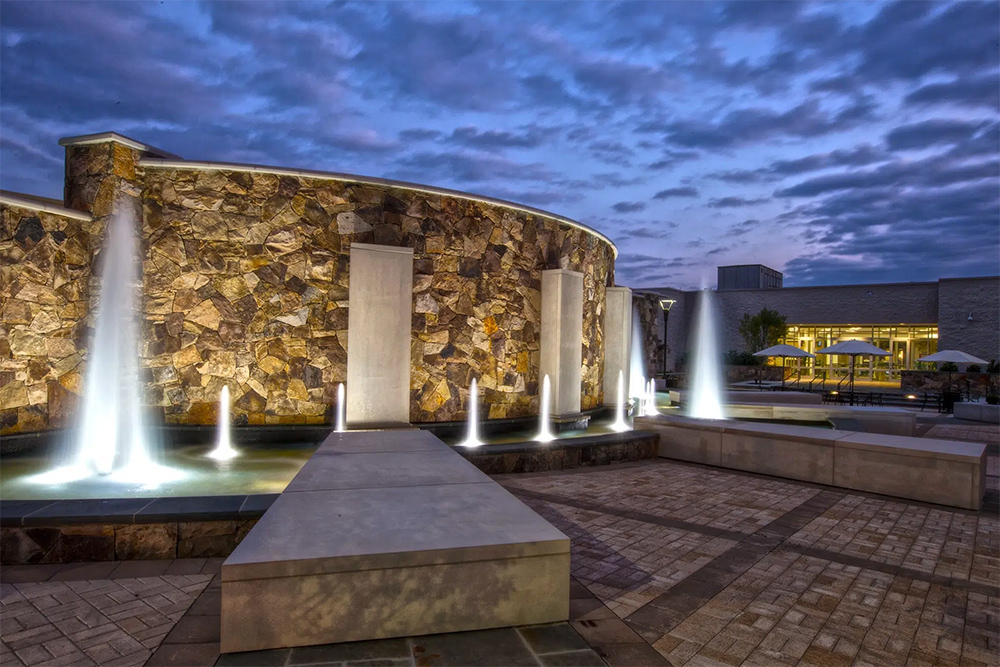
Why Modern Commercial Fountains Are Easier to Maintain Than Most Expect
In commercial landscape architecture, fountains often begin as a compelling design feature—but are frequently removed during early value engineering.
The reason is almost always the same: maintenance concerns.
For landscape architects responsible for long-term performance, any element that appears operationally complex raises valid questions about upkeep, cost, and owner responsibility. So when a fountain enters the conversation for a plaza, campus, or mixed-use development, the instinctive question becomes:
Is this going to create an ongoing maintenance burden for the owner?
That concern is understandable. But in many cases, it’s based on outdated assumptions about how modern commercial fountain systems actually operate.
Today’s systems are not decorative water features that require constant attention—they are engineered infrastructure designed for automation, predictability, and long-term serviceability.
Why Fountains Are Often Removed From Commercial Designs
In early design phases, fountains are commonly value-engineered out of projects due to perceived risks such as water quality issues, mechanical complexity, seasonal shutdown requirements, and uncertain long-term operating costs.
These concerns tend to stem from legacy systems or poorly integrated installations, not modern commercial fountain technology.
This hesitation is reflected in common search behavior like “are commercial fountains high maintenance” or “low maintenance fountain systems for commercial projects.”
The key distinction is this: fountains are not inherently high-maintenance—poorly designed systems are.
How Modern Fountain Systems Reduce Maintenance Requirements
Modern commercial fountains are built as closed-loop systems that continuously filter and reuse water rather than relying on constant replacement or high waste flow designs. This alone dramatically reduces operational demand.
Instead of manual oversight, many systems now rely on automated water quality control systems that manage chemical balancing, filtration cycles, and pH regulation through integrated sensors and controls.
On top of that, modern fountain control systems allow for remote monitoring of pumps, valves, and lighting sequences, reducing the need for frequent onsite intervention and improving operational reliability.
For a deeper look at how these systems are engineered, see modern commercial fountain systems designed for long-term performance and efficiency.
What Maintenance Actually Looks Like in Practice
While modern fountains are significantly lower maintenance than commonly assumed, they are not maintenance-free. The difference is that upkeep is now predictable and planned.
Most systems typically require:
- Routine filter inspection and cleaning
- Seasonal system checks and flushing
- Pump and nozzle inspections
- Winterization in colder climates
- Occasional water chemistry adjustments depending on system design
In practice, these tasks are scheduled into facility operations in the same way HVAC maintenance programs or irrigation system servicing are handled—planned, routine, and manageable.
The key shift is that maintenance is no longer constant or reactive—it is structured and preventative.
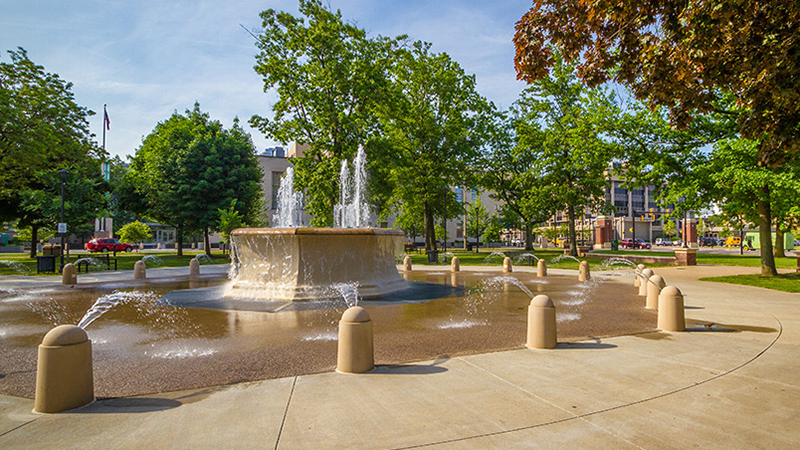
Why Fountains Still Deliver Strong Value in Commercial Landscapes
When maintenance concerns are set aside, fountains consistently deliver disproportionate value relative to their footprint.
They function as spatial anchors within a landscape, helping define gathering areas, guide pedestrian flow, and establish hierarchy in open spaces.
They also increase dwell time by encouraging people to pause, gather, and interact with the environment. In commercial settings, this can translate into more active and engaging public spaces.
Beyond function, fountains also improve environmental comfort:
- They soften urban noise through ambient sound masking
- They add perceived cooling effects in warm climates
- They introduce movement and reflection into static hardscape environments
Finally, fountains often become defining visual elements of a project, shaping how a space is remembered and perceived by users, tenants, and stakeholders.
For examples of how fountains transform commercial environments, explore completed commercial fountain projects across civic plazas, campuses, and mixed-use developments.
[/vc_column_text][/vc_column][/vc_row]